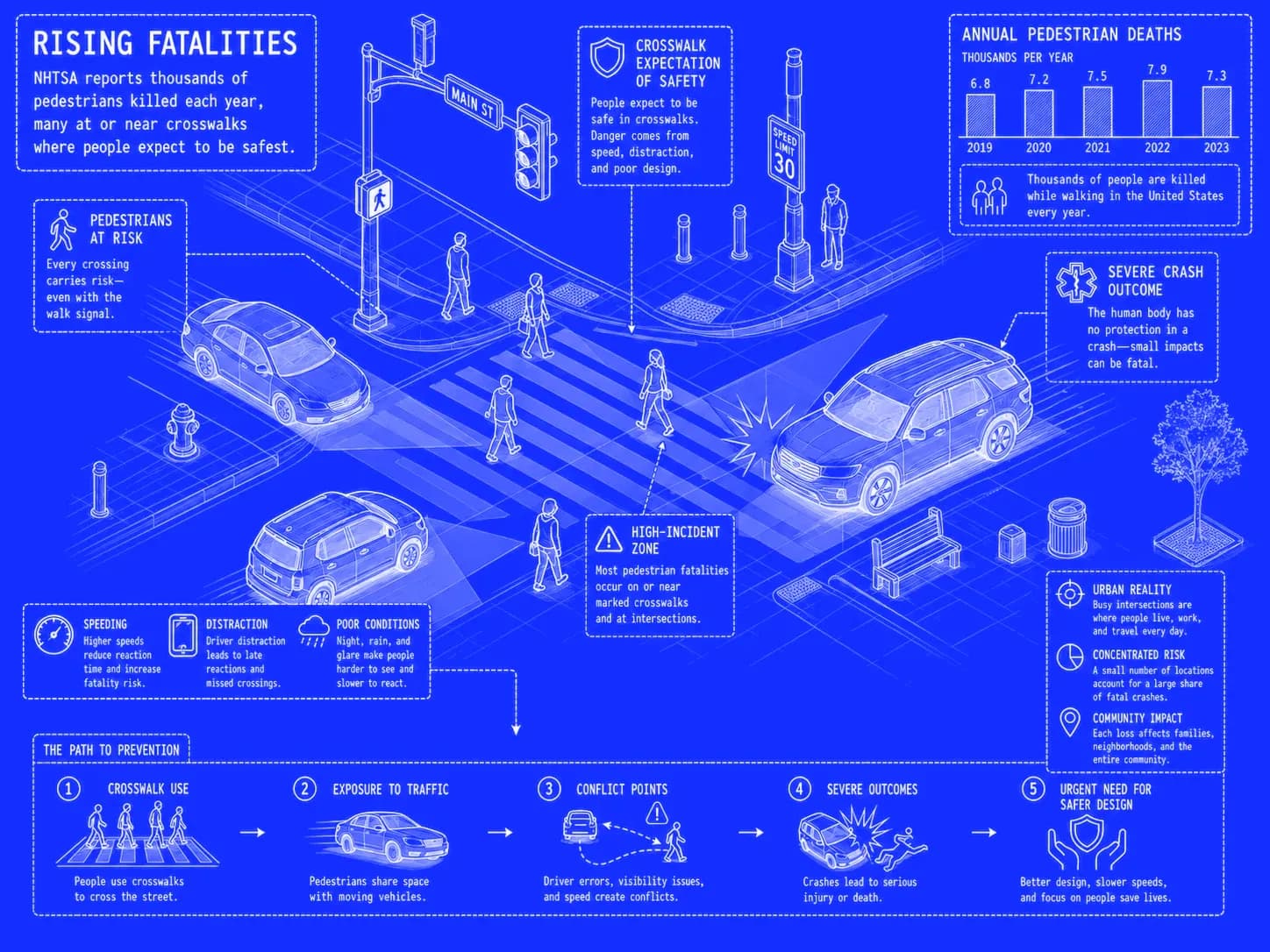
Rising fatalities
NHTSA reports thousands of pedestrians killed each year, many at or near crosswalks where people expect to be safest.
SAFECROSS
SafeCross · Course proposal
Pedestrian fatalities have climbed for over a decade. SafeCross combines three layers: smart LED crosswalks, AI traffic monitoring, and redesigned raised infrastructure. Together they protect people at the curb.
7,500+
Annual U.S. pedestrian fatalities
75%
Share of crashes in low light
3
Stackable layers at one crossing
The problem
Faded paint, distracted drivers, and aging signal design leave gaps that better infrastructure can close.
NHTSA reports thousands of pedestrians killed each year, many at or near crosswalks where people expect to be safest.
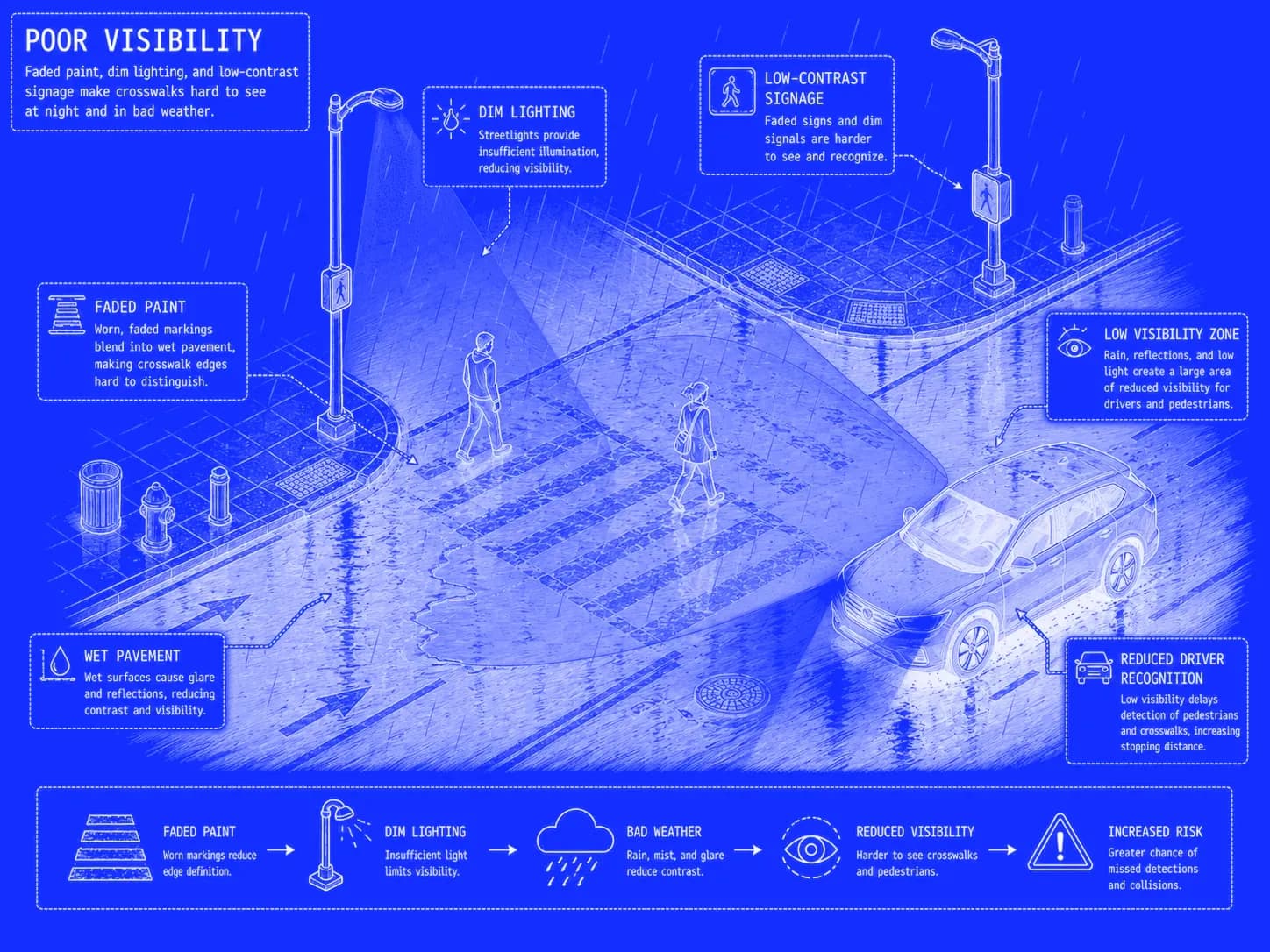
Faded paint, dim lighting, and low-contrast signage make crosswalks hard to see at night and in bad weather.
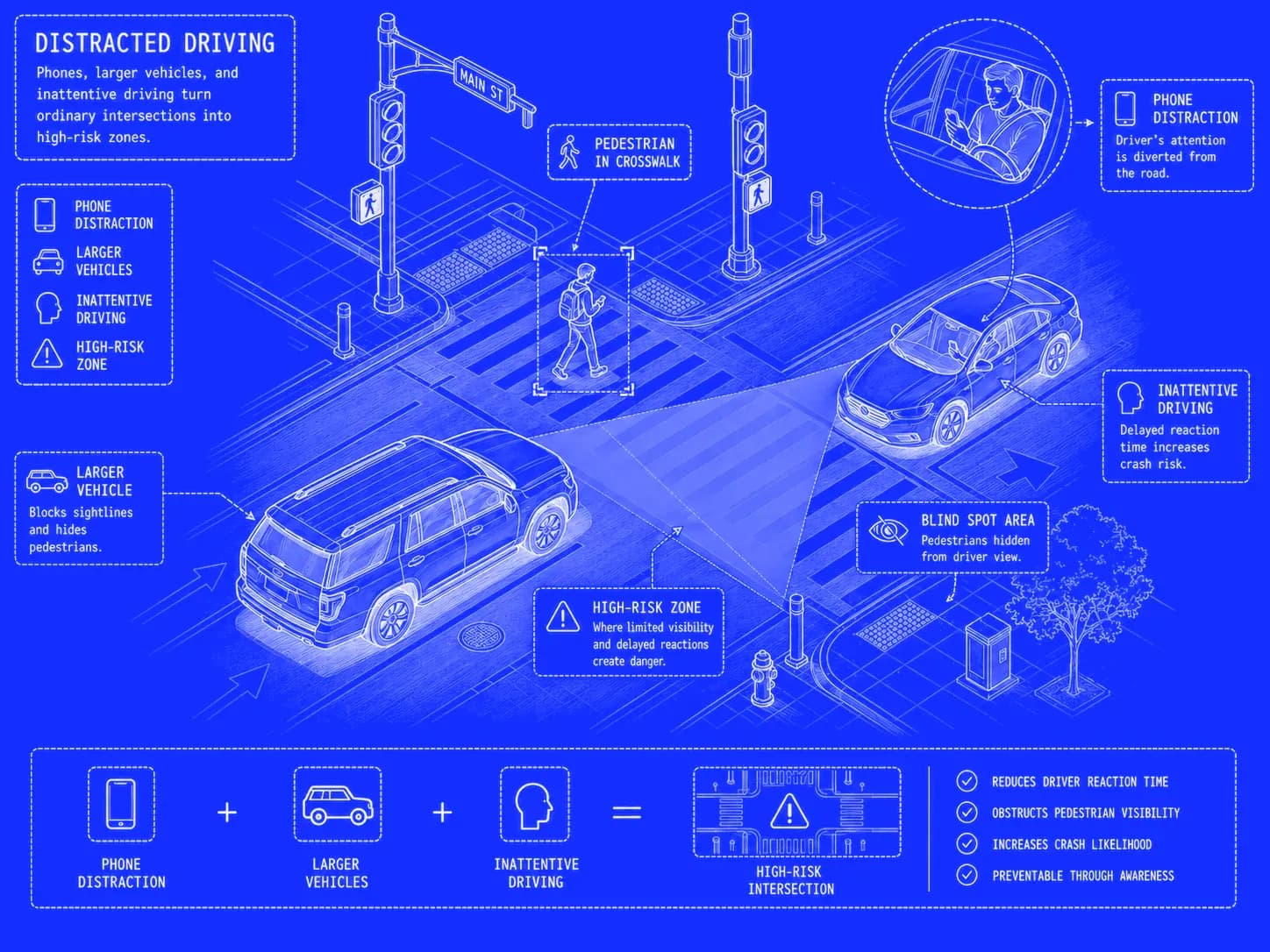
Phones, larger vehicles, and inattentive driving turn ordinary intersections into high-risk zones.
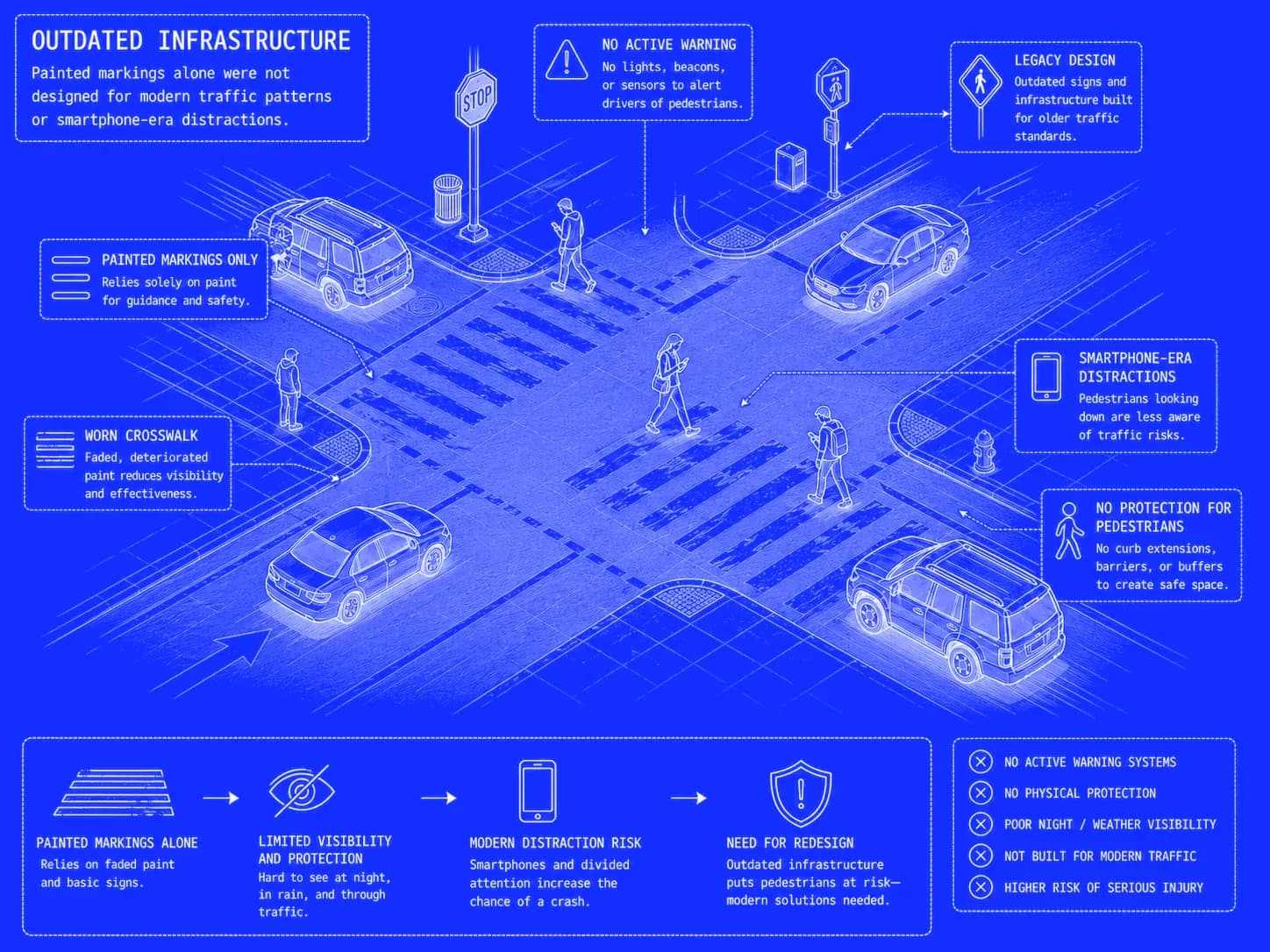
Painted markings alone were not designed for modern traffic patterns or smartphone-era distractions.
Our approach
Pick one layer or combine them: visibility, awareness, and physical design each address a different failure mode.
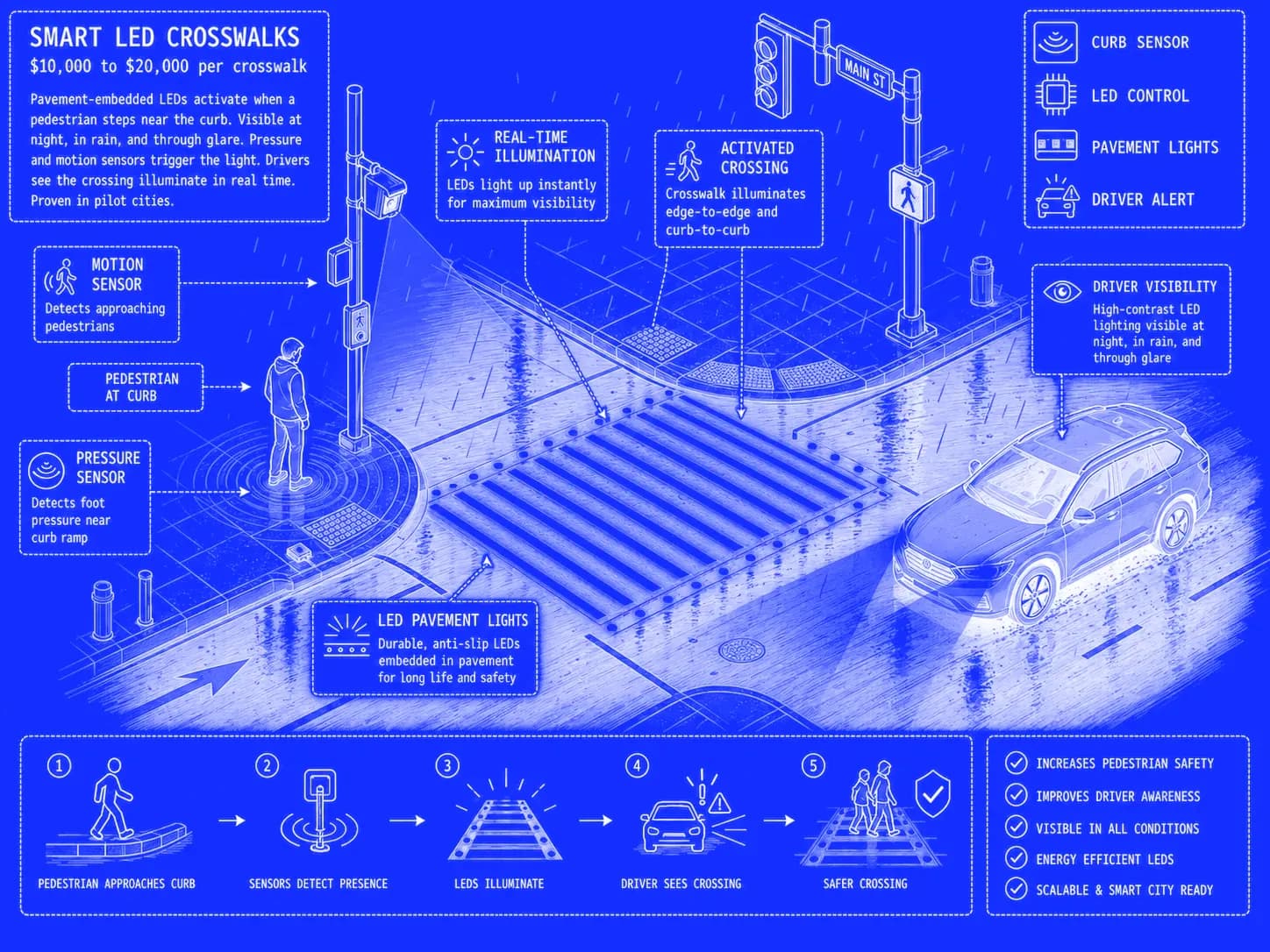
Pavement-embedded LEDs activate when a pedestrian steps near the curb: visible at night, in rain, and through glare. Pressure and motion sensors trigger the light. Drivers see the crossing illuminate in real time. Proven in pilot cities.
$10,000 to $20,000 per crosswalk
Requires pavement upgrades and power · Moderate
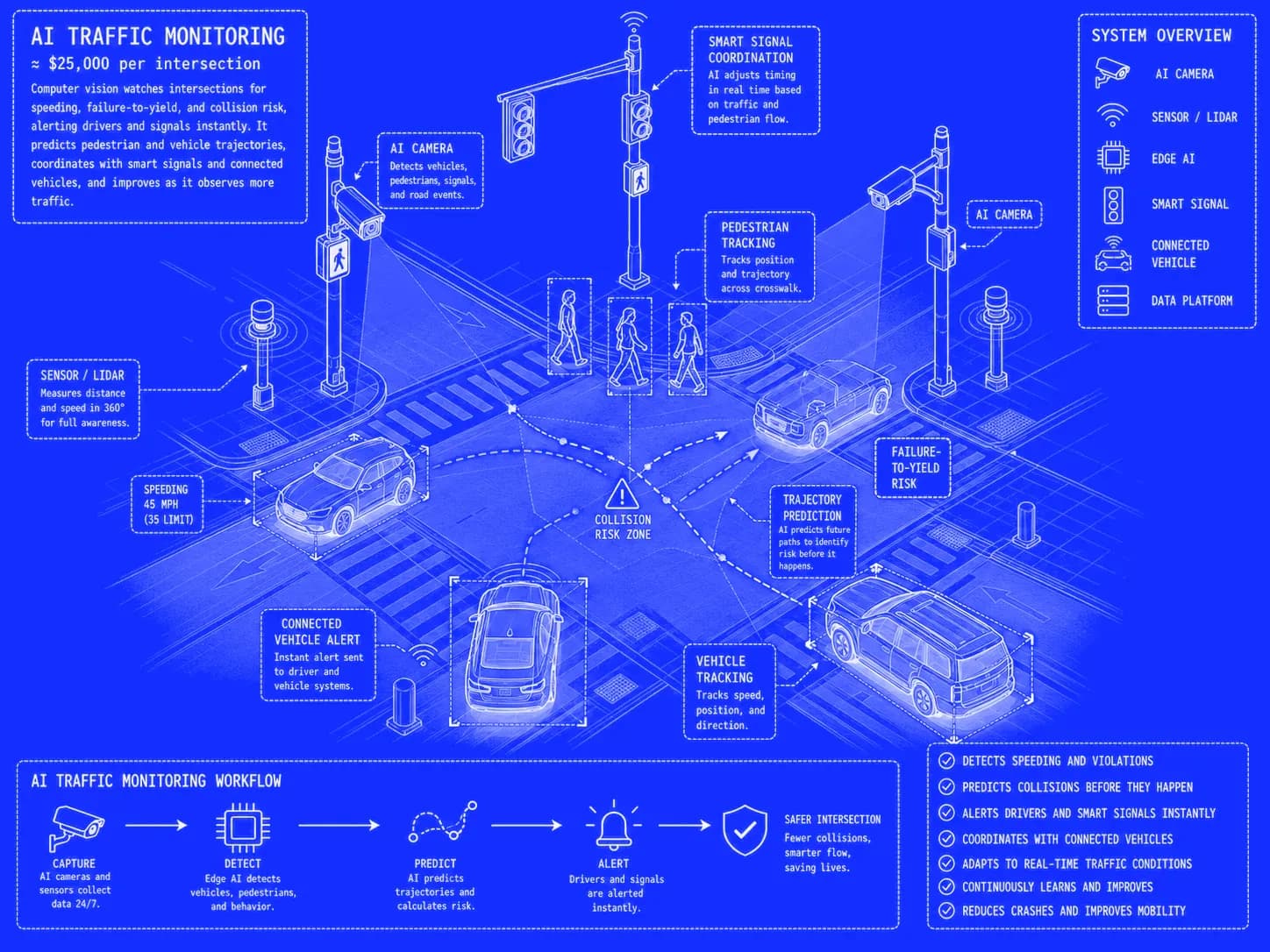
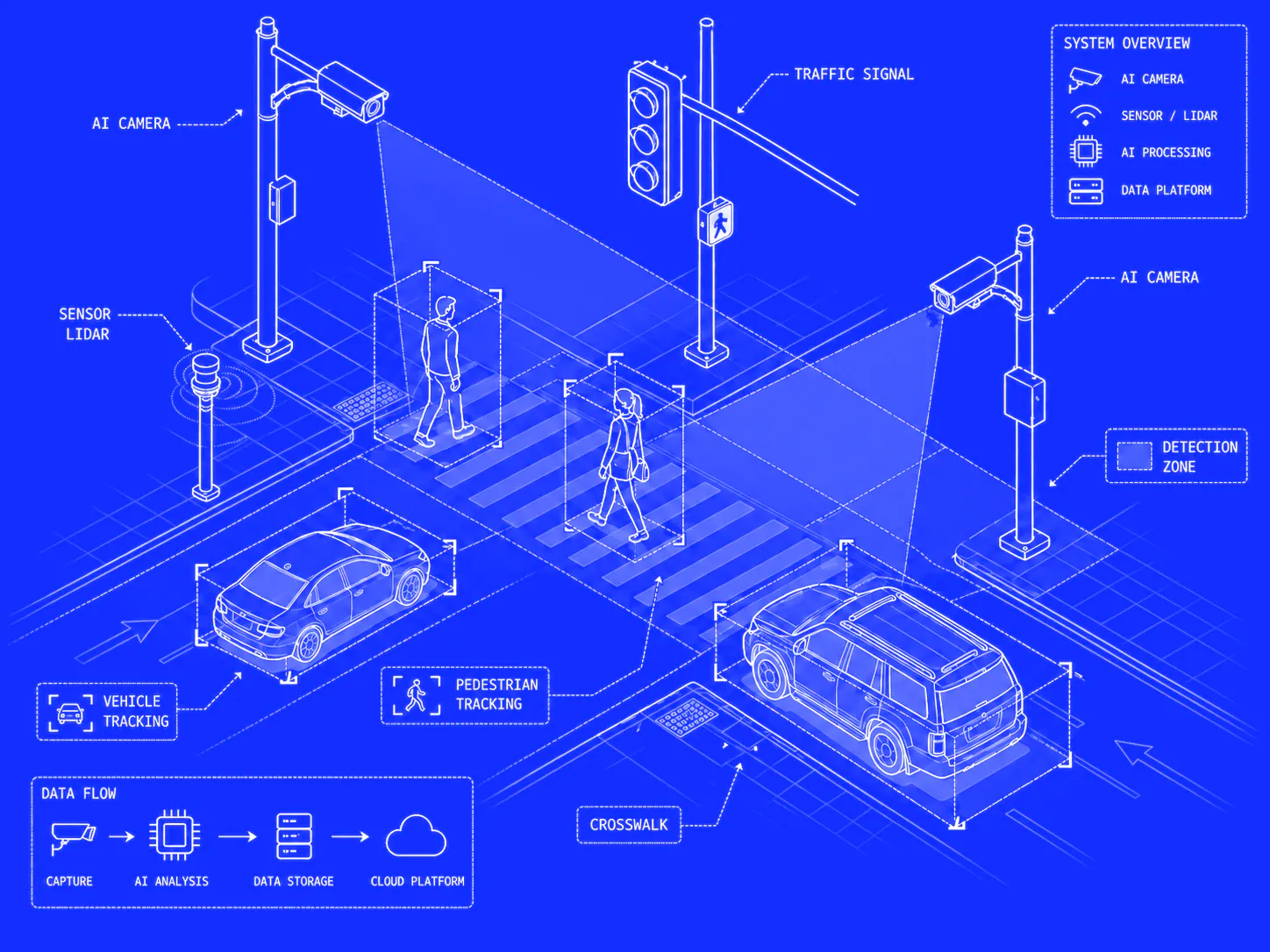
Computer vision watches intersections for speeding, failure-to-yield, and collision risk, alerting drivers and signals instantly. It predicts pedestrian and vehicle trajectories, coordinates with smart signals and connected vehicles, and improves as it observes more traffic.
≈ $25,000 per intersection
Scalable in smart-city programs · Higher complexity
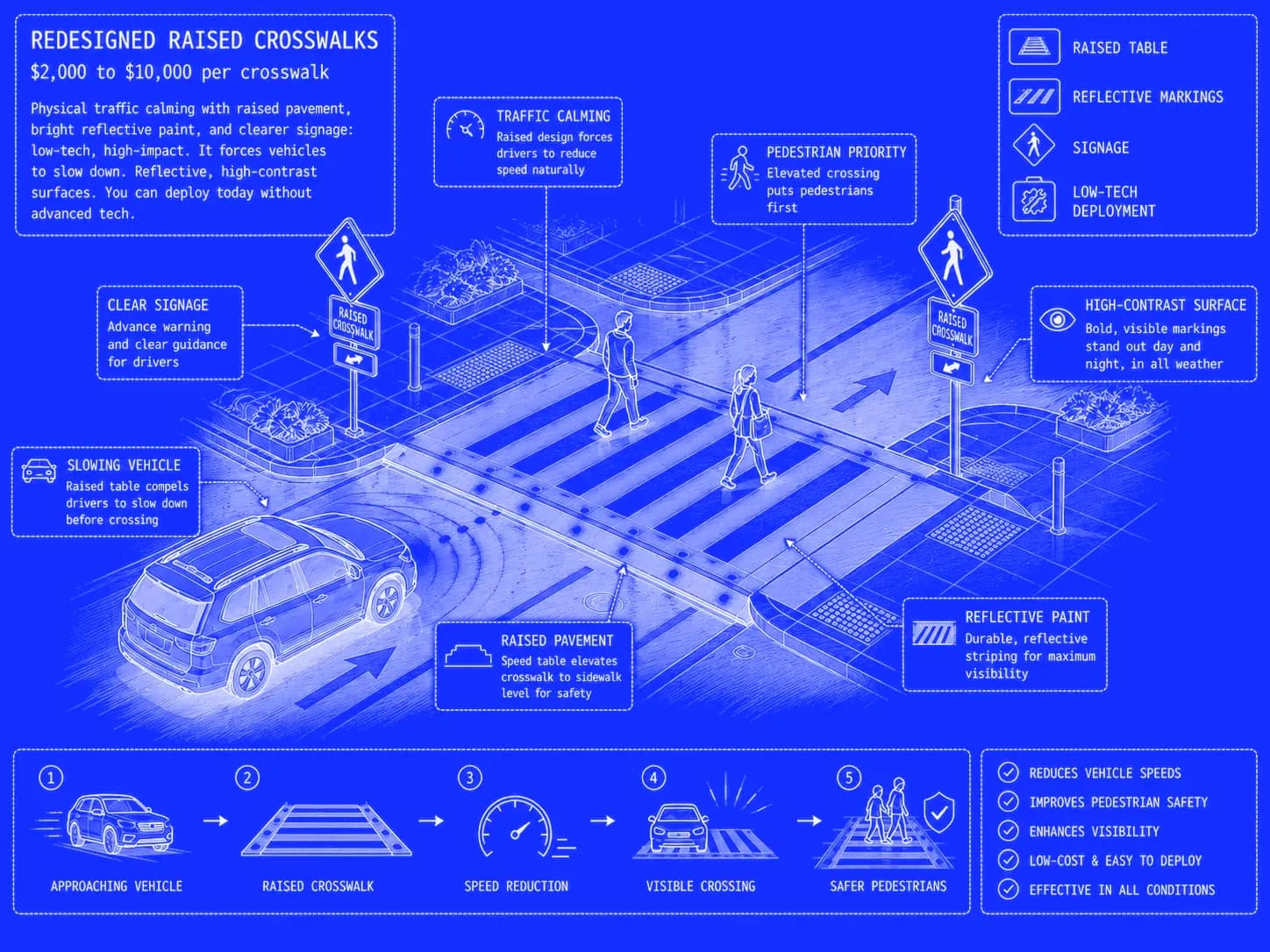
Physical traffic calming with raised pavement, bright reflective paint, and clearer signage: low-tech, high-impact. It forces vehicles to slow down. Reflective, high-contrast surfaces. You can deploy today without advanced tech.
$2,000 to $10,000 per crosswalk
Deployable today · Highly feasible
How it works
Edge sensors and overhead cameras detect a pedestrian preparing to cross.
Embedded LED edges pulse electric blue and white, visible from over 300 feet.
Vision models predict vehicle trajectories and flag potential conflicts.
Roadside signals and connected vehicles get an instant heads-up.
The system logs the crossing, refines its model, and resets for the next person.
Benefits
Layered safety reduces crash and injury rates in pilot studies.
Active lighting and AI alerts cut through distraction and fatigue.
Works at night, in rain, fog, and glare, when paint alone fails.
Fewer ER visits, insurance claims, and road repairs for cities over time.
Implementation plan
Start in a few intersections. Measure rigorously. Grow only when the data supports it.
Pilot
Install smart LED and raised crosswalks at 3 to 5 high-incident intersections in a partner city. Add AI monitoring at one signal.
Measure
Run 12 to 18 months of crash, near-miss, and driver-behavior data. Compare against control intersections, then refine models.
Scale
Roll out validated combinations across high-traffic and school zones. Share an open data dashboard for residents and planners.
You can pilot SafeCross at a single intersection this year. The tools exist. The need is urgent.
Authors